
Last updated November 15, 2026
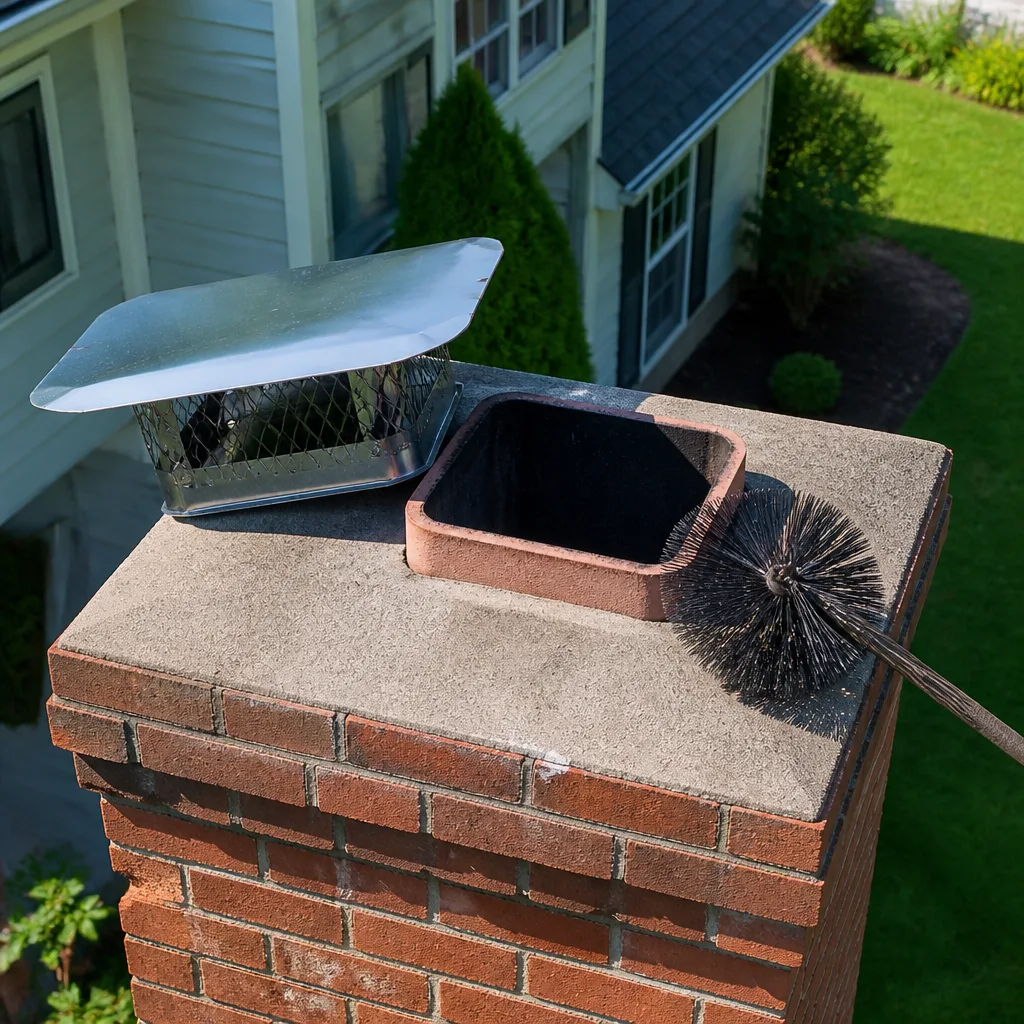 Sweep & inspection
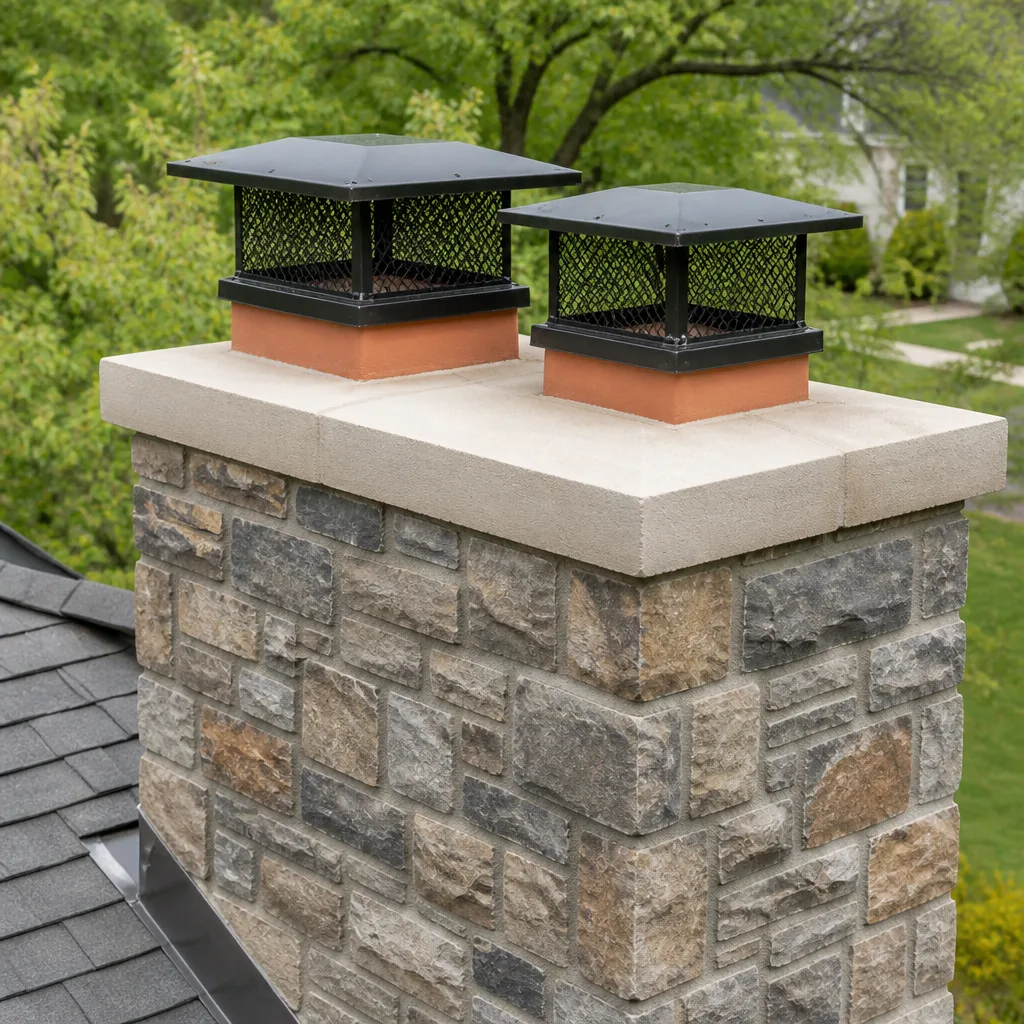 Caps & crowns
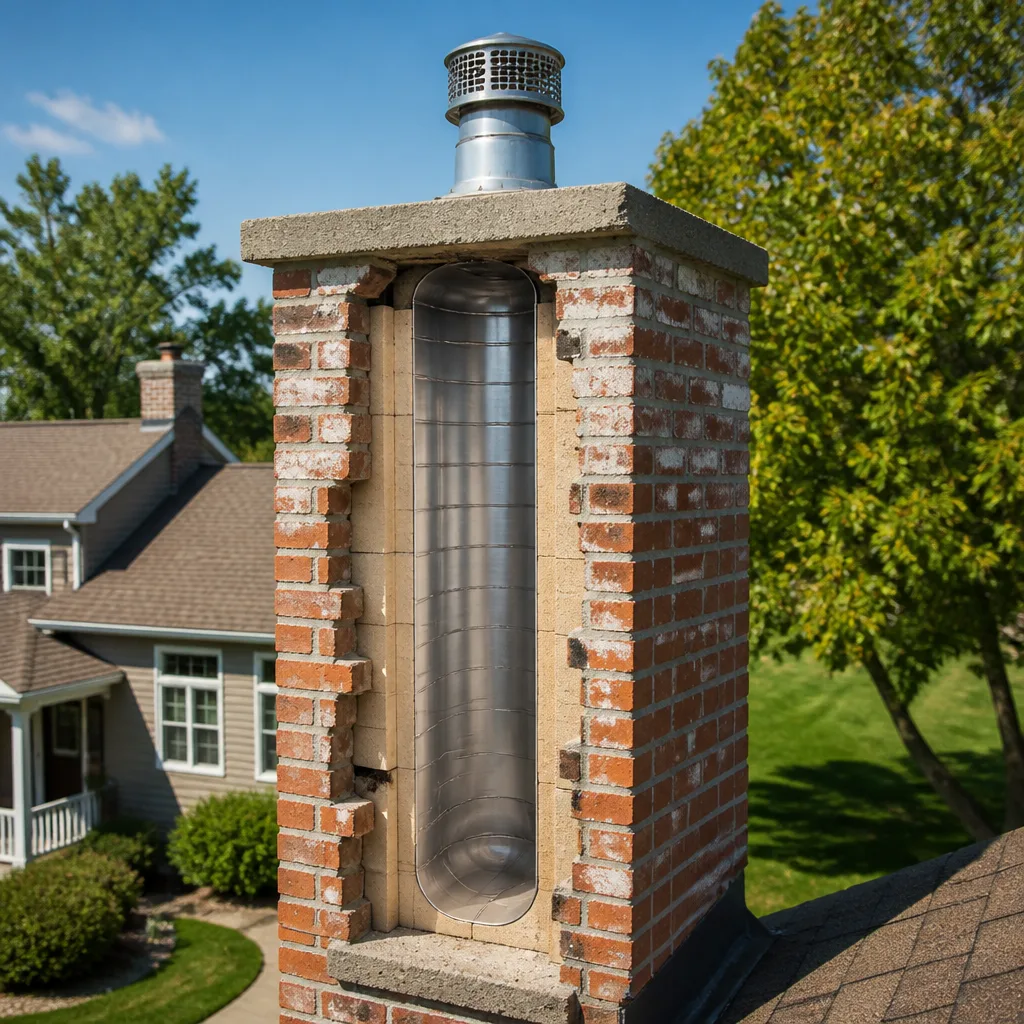 Flue relining
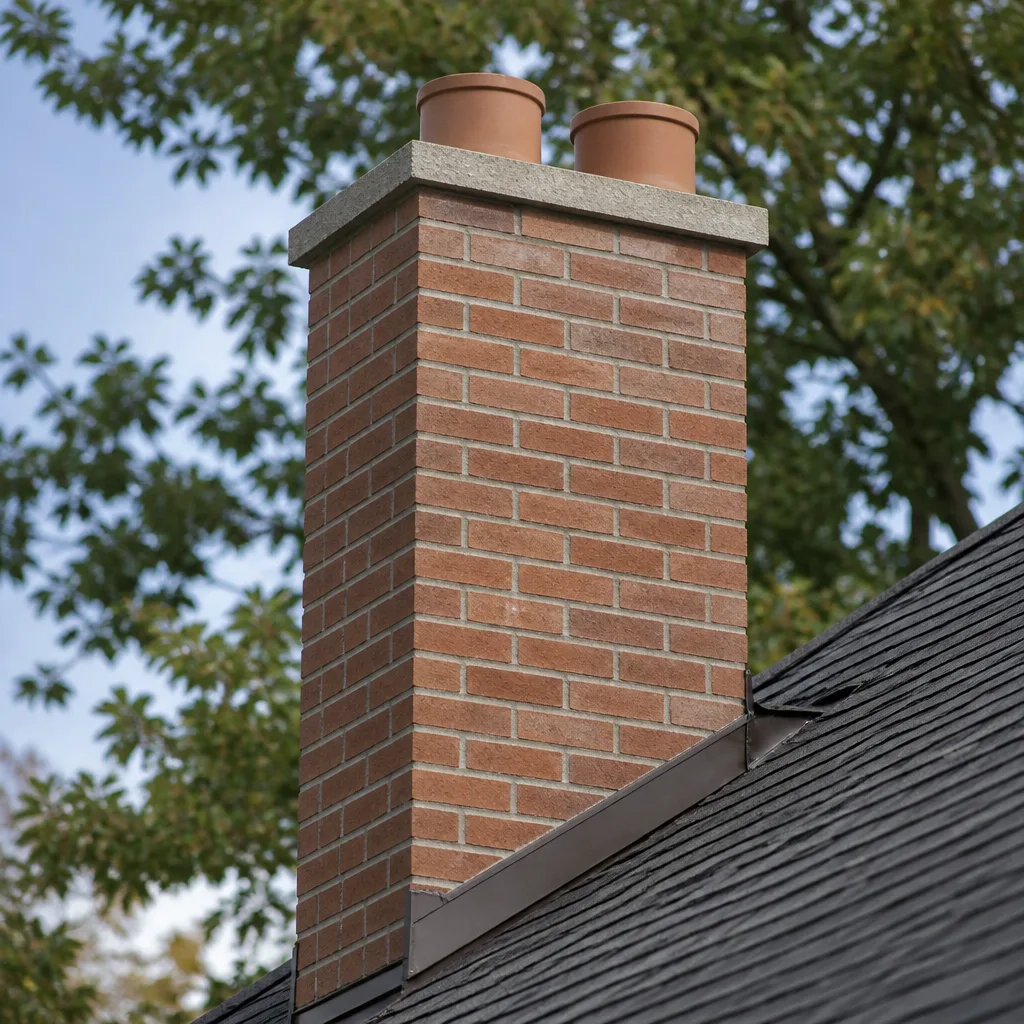 Masonry repair
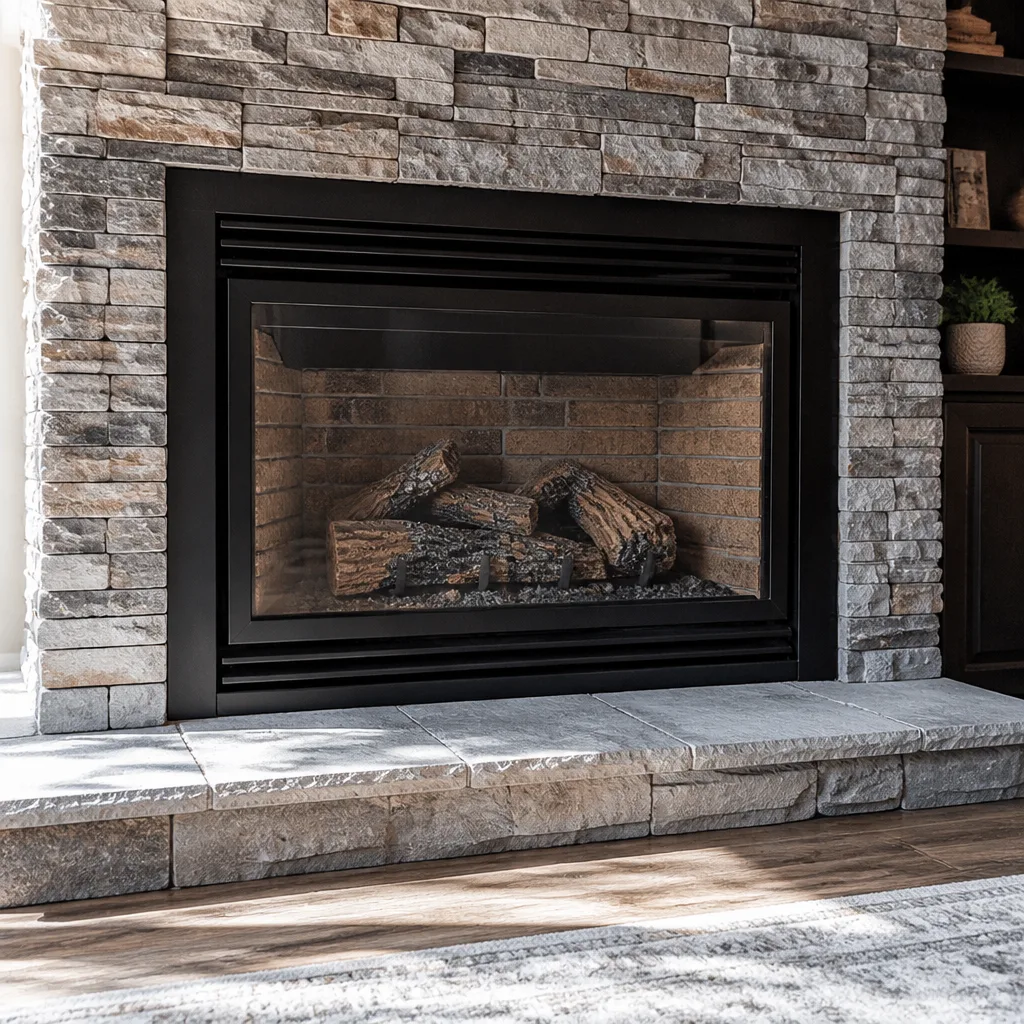 Gas fireplace service
Level 1 sweep and inspection to the NFPA 211 annual standard - flue, crown, cap, and flashing checked and photographed
Chimney sweep logs do not sweep chimneys. They loosen some creosote - which then falls where a brush and vacuum still have to collect it.
Chimney Cleaning Warning Signs: A Provo Homeowner’s Reference Guide
Glazed creosote looks like black tar or a shiny, bubbled coating inside the flue. Most homeowners who see it assume it’s ordinary soot and figure a brush will take care of it. It won’t. Stage 3 creosote ignites at around 2,000°F and cannot be removed by brushing alone, and that single misread sign is behind a large share of the chimney fires we get called out to assess. This guide walks through the warning signs Provo homeowners most often dismiss as normal: the campfire smell that’s really negative pressure, the summer musty odor that means moisture in the liner, the white staining on brick that signals water working its way through. You’ll learn what you can safely see from the firebox opening, what only a camera inspection catches, and the exact conditions that mean stop using the fireplace today.
Quick Answer
The warning signs that mean you need chimney cleaning in Provo are: a strong smoky or campfire smell in the room when the fireplace isn’t lit, black staining on the damper plate, soot on the mantel or facing, chronic smoke rolling back into the room instead of drafting up, glaze or tar-like coating visible in the flue, white efflorescence or rust streaks on the exterior brick, and musty odors coming from the fireplace in summer. Any one of these means it’s time for a sweep and a camera inspection. A confirmed liner crack, stage 3 glazed creosote, or a blocked flue means stop using the fireplace until a professional has it in hand.
Styles & brands we work with
- Sweep & inspection
- Caps & crowns
- Flue relining
- Masonry repair
- Gas fireplace service
Table of Contents
- The Three Stages of Creosote: What You Can See and What You Can’t
- Smoke Rolling Into the Room: Cold-Flue Reversal vs. Negative Pressure
- Exterior Warning Signs on Provo Homes
- Indoor Warning Signs Most Homeowners Dismiss
- The Stop-Use Threshold
- What a Proper Inspection Actually Covers
- How Often to Sweep in Provo’s Climate
- Common Mistakes to Avoid
The Three Stages of Creosote: What You Can See and What You Can’t
Creosote builds in three recognizable stages, and each one calls for a different response. The stage matters more than the amount, because a small patch of stage 3 glaze is more dangerous than a thick coating of stage 1 soot.
Stage 1 – flaky soot. This is the light, powdery, gray-black deposit that settles on the flue walls after a few fires. It brushes off easily and smells faintly of ash. A homeowner looking up through the open damper can usually see it as a velvet-gray dusting on the smoke chamber. Ordinary annual sweeping removes it.
Stage 2 – crusty black deposit. Stage 2 is harder, denser, and clings to the flue wall like dried tar. It looks like a rough black crust, sometimes with a slight shine, and a household brush won’t move it. It smells sharper than stage 1, closer to creosote and burnt wood than plain ash. Removing stage 2 requires a rotary sweep and, in some cases, chemical treatment before brushing. This is where an amateur attempt can damage a flue, and where a professional sweep with the right tools makes the difference.
Stage 3 – glazed creosote. Stage 3 is the tar-like, shiny, bubbled coating that most homeowners have never actually seen. It looks like melted plastic or black glass fused to the flue wall. It’s the hardest to remove and the most dangerous, because it ignites at very high temperatures and burns hot enough to crack a clay liner. Glazed creosote cannot be brushed away at all. It has to be addressed with a chemical conversion treatment and then removed, and depending on how badly the liner is damaged, it may mean relining.
What you can safely see from the firebox opening is limited: you can look up with a flashlight through an open damper and see the smoke chamber and the first few feet of the flue. Everything above that is invisible from the ground. A camera inspection tells you which stage you’re dealing with and where it sits in the flue. If you see anything glossy or heavily crusted, stop guessing and get it looked at.
Smoke Rolling Into the Room: Cold-Flue Reversal vs. Negative Pressure
A little smoke curling into the room when you first light a fire on a cold morning is normal. It’s called a cold-flue reversal: the flue is full of cold, dense air that has to warm up before the chimney can pull a draft, and once it does, the smoke goes up. It lasts a minute or two, it happens more on cold mornings, and it stops once the flue is warm.
Smoke that keeps rolling into the room after the fire has been burning for fifteen or twenty minutes is a different problem. That’s chronic negative pressure, and it means one of a few things is wrong with the system:
- A blocked or partially blocked flue. A nest, a collapsed liner section, or heavy creosote buildup narrows the passage so the smoke can’t get out fast enough. This is the most dangerous cause because it also means combustion gases have nowhere to go but into the room.
- An undersized flue. If the flue was sized for a different appliance than what’s now connected to it, it will draft poorly no matter how clean it is.
- Inadequate combustion air. A tight, well-sealed modern house can starve a wood stove or fireplace of the air it needs to burn cleanly. When the fire pulls air from the room, it pulls smoke back down the flue as the pressure equalizes.
- A chimney that’s too short for the roofline. Nearby rooflines, trees, or a taller section of the house can create downwash that pushes air back down the chimney.
The campfire smell that lingers in a living room hours after the fire has burned down is usually the same pressure problem at a low level: the house is pulling air down the chimney rather than up, and it brings the smell of old ash and creosote with it. It’s not ambiance. In our experience, homeowners who notice that smell in Provo are often dealing with a flue that needs cleaning plus a combustion-air question that needs answering. The two together matter, because a clean flue that still backdrafts is a flue that will fill the room with smoke again on the next cold night.
Exterior Warning Signs on Provo Homes
You can learn a lot about a chimney from the ground, without climbing anything. Take a walk around the outside of the house and look for these specific signs:
- White staining on brick (efflorescence). Chalky white deposits on the outside of a brick chimney mean water is getting into the masonry and pushing minerals out as it evaporates. On Provo chimneys, this is often the first visible sign that the crown is cracked or the flashing has failed. It won’t fix itself, and it will get worse through freeze-thaw cycles.
- Rust streaks below the cap. Rust marks running down the side of the chimney, or rusty water staining the crown, mean the cap or chase cover has failed and water is getting into the flue. A factory-built cap sourced from a maker like Famco or Copperfield is designed to keep the weather out, and when it rusts through, the flue stops being weather-tight.
- Crown cracking visible from the ground. The crown is the sloped concrete top of a masonry chimney. Hairline cracks are common as concrete ages. Any crack you can see from the ground is letting water in, and it should be sealed or rebuilt before winter.
- Missing or damaged spark arrestor. The spark arrestor keeps embers from landing on the roof and keeps birds and squirrels out of the flue. A missing screen means the next nest is already on its way in.
- Spalling brick or crumbling mortar. Brick faces flaking off, or mortar joints receding, mean water damage has progressed beyond the surface. This is a masonry issue, and it’s a separate conversation from the flue interior – but it’s still a chimney sign worth acting on.
We install Gelco and Famco caps and venting covers so that exterior terminations are weather-tight and code-compliant. A rusted-out cap is a cheap fix compared to a water-damaged liner, and it’s one of the easiest things to catch early from the ground in Provo.
Indoor Warning Signs Most Homeowners Dismiss
Some of the most important warning signs are inside the room, and they’re the ones homeowners most often rationalize away. Each of these has a specific cause:
- Musty odor from the fireplace in summer. A musty smell coming out of the firebox in the warmer months means moisture is trapped in the liner or the smoke chamber. It’s often the first sign that the cap, crown, or flashing has let water in, and it’s worth a camera inspection rather than an air freshener.
- Black staining on the damper plate. The damper is the metal plate you open before lighting a fire. If it’s developing a black, oily coating, that’s stage 2 creosote migrating down from the smoke chamber, and it means the deposits above are heavy enough to be a real fire risk. It’s also a fire-hazard sign that the flue is overdue for a sweep.
- Soot on the mantel or the wall above the firebox. Soot tracking on the mantel or the wall means smoke is escaping the firebox rather than going up the flue. That’s a draft problem, and it usually points to one of the negative-pressure causes above. Soot on the mantel is one of the clearest signs that the chimney needs professional attention.
- A smoky smell in the house on windy days even with no fire lit. This is essentially the backdraft problem at low intensity, and it usually means the flue is dirty or the pressure balance is off.
- Headaches, drowsiness, or a stuffy feeling in a room with a gas appliance. This one is a safety sign, not a comfort issue. A gas log set that’s venting poorly can put carbon monoxide into the room. If anyone in the household feels off when a gas appliance is running, get out of the room, ventilate, and call for service before using it again.
- Visible soot or ash on the hearth or the floor in front of the firebox. Small amounts are normal. A persistent dusting of soot in front of the firebox that wasn’t there before means smoke is escaping the firebox on lighting or while burning.
The Stop-Use Threshold
Most warning signs mean “book a sweep.” A smaller set of signs mean “stop using the fireplace now.” Here’s the difference, and it matters:
Stop using the fireplace immediately if:
- A camera inspection or a visible inspection confirms a crack in the clay or stainless liner. A cracked liner lets fire and hot gases reach the structure of the house and can let carbon monoxide into the home.
- Stage 3 glazed creosote is present and hasn’t yet been removed. Glazed creosote can ignite and burn hot enough to fail the liner, and once it’s lit, the fire is inside the chimney and out of your control.
- The flue is blocked by a nest, a collapse, or heavy deposits. A blocked flue means combustion gases are going into the room, and that includes carbon monoxide.
- There’s a strong, continuous smoke smell in the living space, or visible smoke rolling back into the room every time the fire is lit, even after it’s been burning a while.
- You see or smell burning in the wall or hear a roaring sound from the chimney that doesn’t match the fire in the firebox. That can mean a chimney fire has already started. Get everyone out and call the fire department.
Fire risk and carbon monoxide risk are both real, and both are tied to those specific conditions. This is not a scare tactic – most chimneys that need cleaning are simply overdue for cleaning, and the fix is routine. But a confirmed liner crack is a stop-use condition. So is glazed creosote. So is a blocked flue. We would rather tell you to stop for a few weeks and get it fixed properly than have you find out the hard way.
We use the HeatShield ceramic resurfacing system – an EPA-recognized repair method – for cracked or deteriorating mortar joints, and DuraFlex stainless-steel liner systems for full relining. Both are real fixes for the stop-use conditions above, and both are things we can schedule as part of the same service call as the sweep.
What a Proper Inspection Actually Covers
A chimney sweep and a chimney inspection are related, but they’re not the same thing. A sweep removes the deposits. An inspection tells you what’s going on in the whole system. A proper inspection covers:
- The firebox and hearth. Checking for cracks in the firebrick, gaps in the mortar, and the condition of the damper.
- The smoke chamber. The sloped transition between the firebox and the flue. This is where stage 2 and stage 3 deposits tend to concentrate, and it’s invisible from the firebox without a camera.
- The flue from top to bottom. Camera inspection of the full flue run catches cracks, gaps at the joints, and any offset or collapse.
- The cap, crown, and flashing. These are the three places water gets in, and all three need to be checked from the roof.
- The exterior termination. Making sure the cap and any venting components are intact and code-compliant – this is where an Olympia Chimney or Copperfield cap or a Famco cover gets specified.
- The connection to the appliance. The stovepipe or connector needs to be seated and sealed correctly, and any gaskets need to be intact.
At the end, you should have a written report with photos of what the camera saw. You should be able to look at the photos yourself and see the deposit or the crack or the gap, in the same places the technician pointed to. If you’re handed a recommendation for thousands of dollars of liner work with no photo evidence, ask for the photos before you agree to anything. That’s not a hard thing to ask for, and any honest inspection should give you the evidence without being asked twice.
How Often to Sweep in Provo’s Climate
The standard industry guidance is to sweep once a year, or after about a cord of wood, whichever comes first. In Provo, both parts of that matter. Provo winters are cold enough that a wood-burning homeowner can run through a cord in a season, and the valley’s high-desert climate – with dry summers and cold winters – means the masonry goes through freeze-thaw cycles every year. That’s the cycle that opens cracks in the crown and works water into brick, which is why the exterior signs matter here as much as the interior ones.
Three things change the schedule in Provo specifically:
- How much you burn. A fireplace used a few times a month needs an annual sweep. A wood stove used as primary heat through the winter needs more frequent attention, and often mid-season.
- What you burn. Seasoned, dry wood produces less creosote than green wood. If you’re not sure your wood is seasoned, assume more frequent checks.
- Whether the chimney is capped and sealed. A cap that’s failed, or a crown that’s cracked, lets moisture in – and moisture accelerates the deposit problem and the freeze-thaw damage both. Getting the cap and crown sound is the cheapest way to keep the whole system in shape.
An annual sweep is the baseline. A camera inspection every few years, and any time you’re seeing a warning sign, is the thing that catches the problems before they become repairs.
Common Mistakes to Avoid
- Treating glaze as soot and brushing it yourself. A consumer brush won’t move stage 3 glazed creosote, and a metal brush on a damaged liner can make the damage worse. If you see a shiny or tar-like coating, that’s a professional call.
- Assuming the smoke smell is just “the campfire smell.” A lingering smoke smell in the room when the fire is out is a pressure or draft problem, and it’s the most commonly dismissed warning sign. It’s not a cozy feature of the house.
- Skipping the exterior walk-around. White staining, rust streaks, and crown cracks are all visible from the ground and all get worse through freeze-thaw. Homeowners who only look inside the firebox miss the signs that are easiest to fix early.
- Taking a quote for a full reline without asking to see the camera footage. Nothing should be recommended that you can’t see evidence for. Liner work is a real repair when it’s real, and a real repair has photos attached.
- Burning green or unseasoned wood to stretch the season. Wet wood produces more creosote, which means more frequent sweeps. The savings on wood gets eaten by the added sweep.
- Using the fireplace after a confirmed liner crack “for now.” A crack is a stop-use condition. There’s no safe “for now” with a cracked liner.
- Forgetting the dryer vent. Dryer vent cleaning is a separate safety issue from the chimney, but it’s the same kind of risk: lint buildup in a vent is a leading cause of residential structure fires, per NFPA data, and it’s easy to ignore until it’s a problem. If the chimney sweep is booked, it’s a sensible time to have the dryer vent done too.
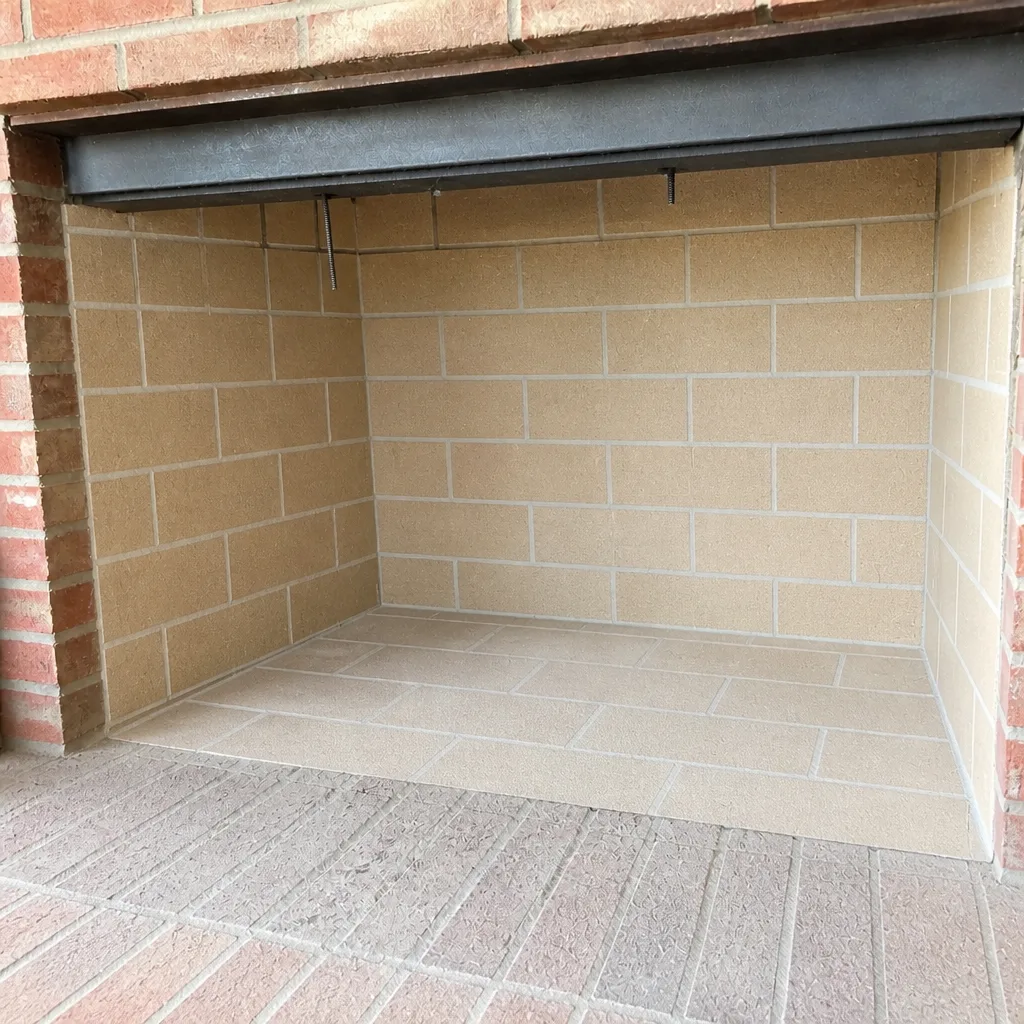
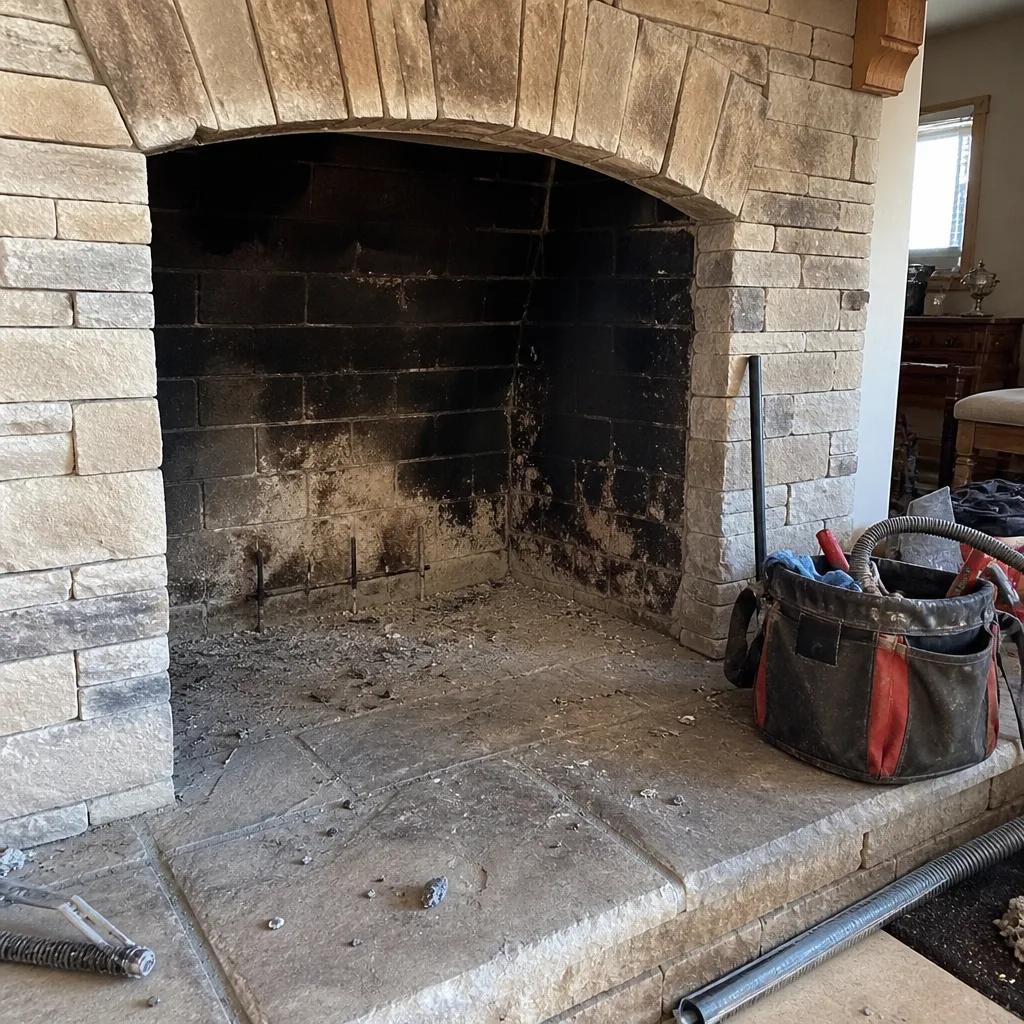
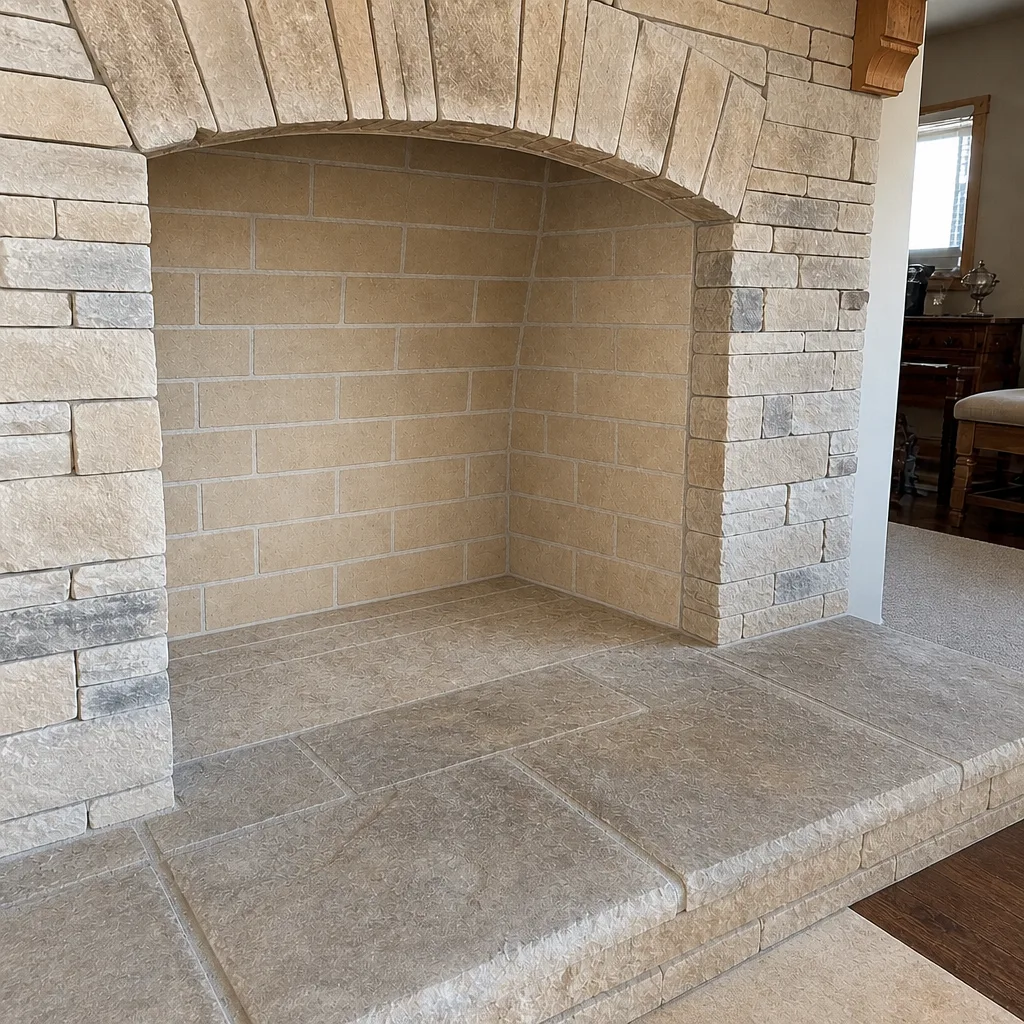
See the difference
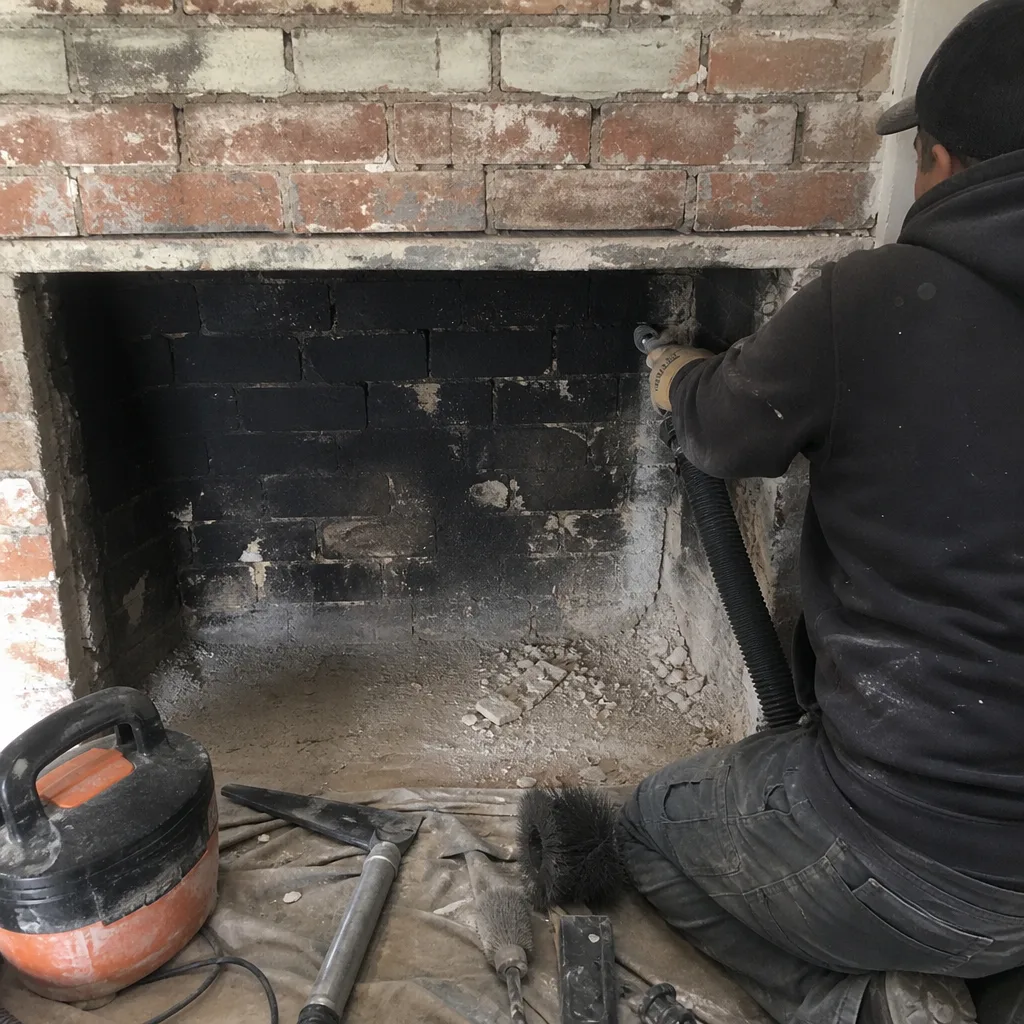 Before
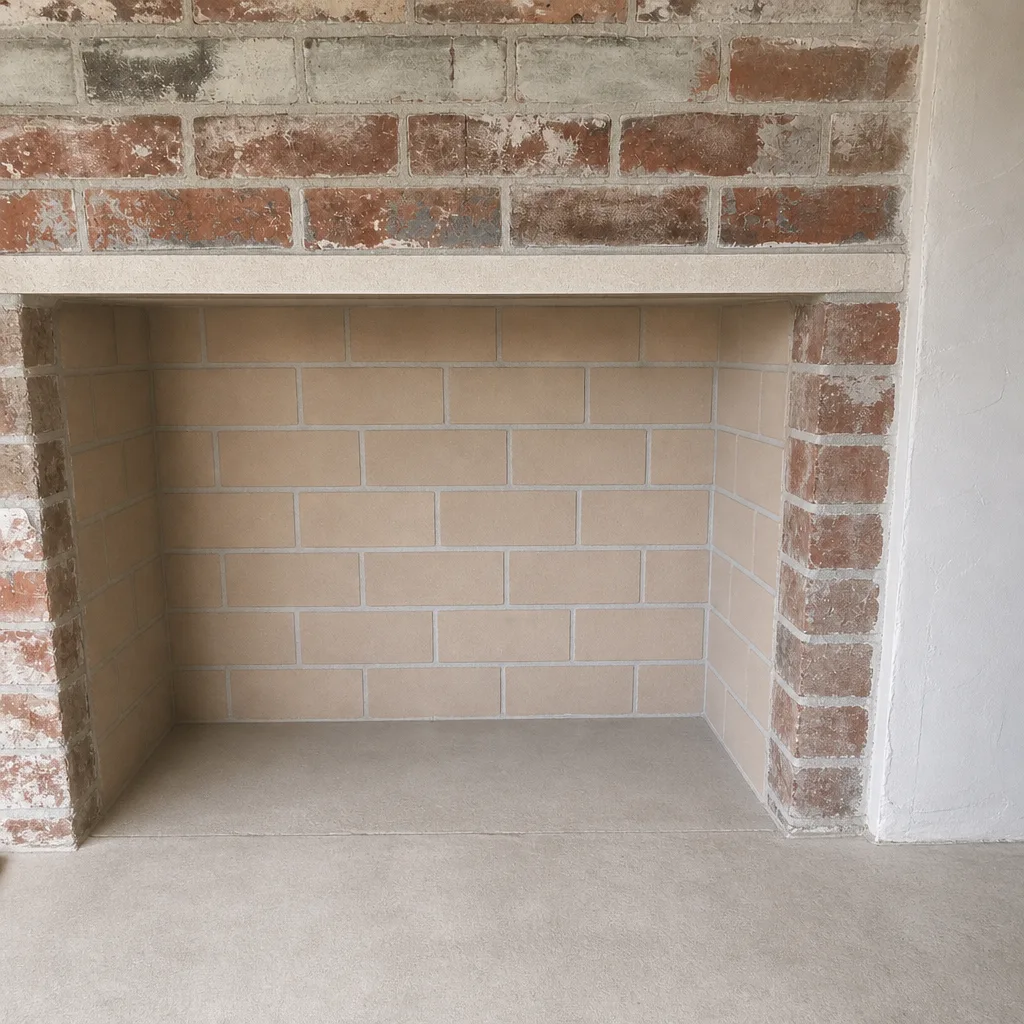 After
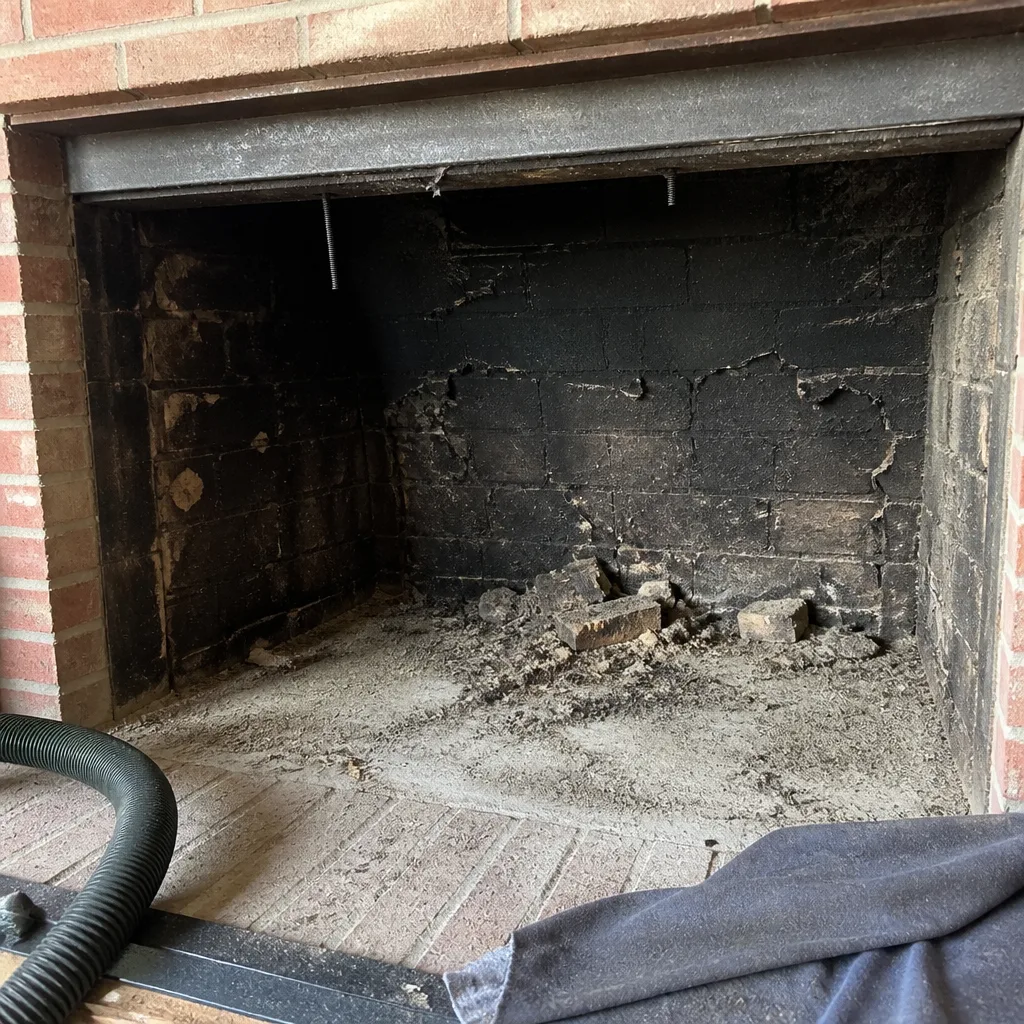 Before
 After
 Before
 After
When to Call a Professional
Call a professional for a chimney sweep in Provo if any of the following is true: it’s been a year or a cord of wood since the last sweep, you’re seeing glaze or heavy crusted deposits in the flue, you’re getting a smoke smell in the room when the fire is out, you’re seeing white efflorescence or rust streaks or crown cracks on the exterior, or you’re getting smoke rolling into the room long after the fire has been lit. Call immediately if you have a confirmed liner crack, stage 3 creosote, a blocked flue, or a roaring chimney fire. Keep the numbers in mind: the sweep, the inspection, and the repair can be handled in a single visit. We use HeatShield for resurfacing and DuraFlex for relining, so a stop-use condition discovered during the sweep gets fixed without a second appointment. Chimney Sweep Provo offers free estimates in Provo – call (855) 340-2065. We answer 24/7. Fast dispatch from 7am to 7pm, Sunday through Friday.
Frequently Asked Questions
A chimney sweep in Provo typically costs in the range of $180 to $350 for a standard sweep, and a camera inspection is usually included or added for a modest amount. The exact price depends on the access, the level of deposit, and whether repair work is needed. Call (855) 340-2065 for an exact quote – estimates are free.
You can tell stage 1 by the powdery gray dusting, stage 2 by a hard black crust that brushes won’t move, and stage 3 by a shiny, tar-like or bubbled coating fused to the flue wall. You can see stage 1 and sometimes stage 2 from the firebox with a flashlight, but stage 3 is often only confirmed with a camera inspection. A professional sweep with a camera is the reliable way to know.
Only if the camera inspection confirms a crack, a gap at the joints, or deterioration that lets fire or gases reach the structure. A real reline is a real fix – we use DuraFlex stainless-steel liner systems for exactly that repair – but it should always come with camera evidence you can see yourself. If nobody can show you the footage, ask for it before you agree. Call (855) 340-2065 for an inspection – estimates are free.
Once a year, or after about a cord of wood, whichever comes first. Homes that use a wood stove as primary heat often need more frequent sweeps, and mid-season attention is common. Provo’s freeze-thaw cycle also makes an annual exterior check worth doing. Call (855) 340-2065 to book a sweep – estimates are free.
Deposits build faster than most homeowners expect, and the two real risks are a chimney fire igniting the creosote and carbon monoxide backing up into the home if the flue becomes blocked. Neither is guaranteed, but both are far more likely with a dirty flue than a clean one. The right move is to book a sweep rather than roll the dice. Call (855) 340-2065 – estimates are free.
Because the house is pulling air down the chimney rather than up, which is negative pressure, and it carries the smell of old creosote and ash into the room. In Provo, that’s often a combination of a dirty flue and a combustion-air question. It’s a sign to get a sweep and a camera inspection before the next cold snap. Call (855) 340-2065 – estimates are free.
Light stage 1 soot can be handled with the right brush and a lot of care, but stage 2 and stage 3 deposits need professional tools and chemical treatment, and the inspection is not something you can do from the ground. The bigger issue is that a homeowner can’t reliably confirm a liner crack or a blockage without a camera. For a system that puts fire and carbon monoxide through your house, professional is the right call.
The Bottom Line
The warning signs that matter most are the ones that are easiest to misread: glazed creosote that looks like soot, a smoke smell that gets called normal, and white staining on brick that gets put off until “next year.” The three stages of creosote call for three different responses, and stage 3 is a stop-use condition. Chronic backdrafts are a symptom, and the cause is usually a blocked flue, an undersized flue, or inadequate combustion air. The exterior signs – efflorescence, rust streaks, crown cracks – are visible from the ground and get worse through freeze-thaw. If you’re seeing any of these in Provo, the sweep and the inspection are the next step, and if a repair is indicated, we can do it in the same visit. Book a chimney sweep and get a camera report you can look at yourself.
Ready to get it checked? Call (855) 340-2065 for a free estimate. We answer 24/7. Fast dispatch from 7am to 7pm, Sunday through Friday. We handle chimney sweeping, chimney repair, and dryer vent cleaning as a single full-system service, and we use the same industry-grade materials – HeatShield for resurfacing, DuraFlex for relining, and caps and covers from Olympia Chimney and Copperfield – on every repair. Whether you’re in Chimney Sweep Provo territory or anywhere around Provo, the camera report comes first and the recommendation follows from it.
Written by the team at Chimney Sweep Provo.